El Mundo


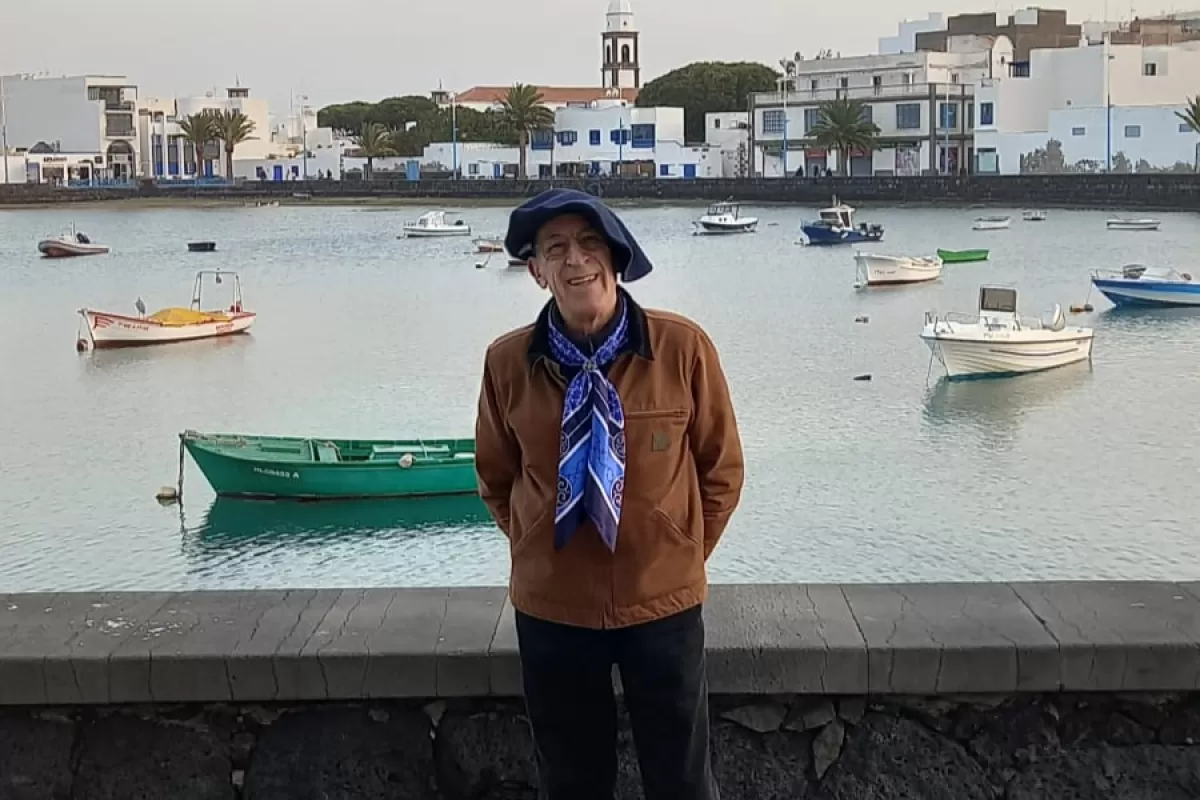
El cantante Jhosemaria De Niro reflexiona sobre el mundo contemporáneo, su vida entre distintos países y el rol del arte en tiempos de ansiedad social. En esta entrevista habla sobre su residencia en las Islas Canarias, su actividad musical internacional y su mirada crítica sobre los cambios económicos, sociales y culturales que atraviesan Europa y el resto del planeta.
—¿Cómo encuentras Europa en tu regreso?
—Puedo decir que nunca me voy. Viajo permanentemente entre los países donde tengo a mi familia y donde desarrollo mis actividades profesionales y comerciales: Francia, España, Italia, Estados Unidos y Argentina.
Lo más curioso es que los perfiles de la realidad se van fundiendo en uno solo. Hay diferencias, por supuesto, pero vivimos en un mundo donde la histeria está condenando a la gente a vivir con angustias, odios e inseguridades que se parecen de un lado al otro.
—¿No te molesta que hablemos de algo externo a lo estrictamente artístico?
—No me molesta porque soy, ante todo, un ciudadano y me caben las generales de la ley. Además, tal vez una mirada de viajero que no es turista pueda aportar algo a la de mis semejantes.
En mi caso, lo artístico creo que habla por sí solo. Basta abrir la ventana de Spotify u otras aplicaciones para comprender que realizar una obra semejante ha llevado muchos años, una vida. Allí está todo, ¿qué más se puede agregar?
Hay que escuchar: se toma o se deja. No me gustan los devaneos hablando de cosas que están ligadas solamente a la aceptación o al rechazo, a lo instintivo, a la piel más que a la razón.
Los pintores inteligentes suelen decir que para mirar un cuadro no es necesario hacer un curso de Historia del Arte: gusta o no gusta, te toca el alma o te resulta indiferente. Me parece interesante comentar de qué modo veo el mundo que vivimos en el presente.
—¿Por qué mencionaste la histeria generalizada del mundo actual?
—En primer lugar, no olvidemos que la humanidad ha vivido entre guerras y horrores a lo largo de toda su existencia.
Las comunicaciones actuales nos ponen en contacto más directo con lo que sucede en otros lugares, aunque suelo insistir en que nada reemplaza la experiencia in situ.
La depresión, en el presente, muestra distintas facetas del mal humor íntimo. En 1940 era solamente un síndrome relacionado con gran parte de las enfermedades mentales.
En 1970 la psiquiatría mostraba cifras donde la depresión era el trastorno mental más extendido en el mundo, mientras los especialistas percibían un notable crecimiento del problema entre sus pacientes.
Hoy este tema capta la particular atención de los profesionales de la salud mental, como la psicosis hace cincuenta años. Palabras como ansiedad, angustia o neurosis tienen gran presencia a causa de los disturbios que encierran.
Aquí comienza a redefinirse la sociología que intenta explicar el fenómeno actual. En síntesis, estos problemas se relacionan con la individualidad contemporánea y con el dilema más antiguo del ser humano: ser uno mismo, ser libre y la fatiga que conllevan semejantes objetivos.
El verdadero desafío en la vida es lograr ser uno mismo, pero el mundo no ayuda demasiado.
—¿Qué elementos consideras que aportan a los problemas conductuales y la estabilidad emocional de las sociedades actuales?
—Las causas son múltiples. Yo mismo conocí Europa en el momento del Estado de Bienestar que nos parecía eterno e inamovible.
Un día comenzó a tambalear porque era muy caro de mantener para los ciudadanos que pagan impuestos. Las empresas empezaron a emigrar, primero hacia Europa del Este. Tras la caída de la Unión Soviética todo era muy barato en los países que llamábamos “detrás de la cortina de hierro”.
Luego esos países se incorporaron a la Comunidad Económica Europea y las empresas se trasladaron a Oriente. Así comenzaron a gestarse los trabajadores informales, sin aportes ni documentación legal.
La huida masiva de personas que escapaban de dictaduras y genocidios también fue oscureciendo el panorama social, generando lecturas equivocadas de la realidad que tienden a culpar a los más desposeídos por la caída de la calidad de vida.
Sin embargo, la causa principal de este disturbio social ya había sido advertida por Lin Yutang en 1945, cuando señaló que la irrupción de China en el mercado mundial produciría cambios traumáticos una vez que resolviera sus problemas internos.
Otros elementos que generan malestar de forma subliminal son buena parte del mal llamado arte que se consume, el cine violento que da ideas horrorosas de acciones delictivas y los medios de comunicación masivos que, para ganar audiencia, venden lo trágico con gran morbosidad. Manda el dinero.
—Te has beneficiado de la irrupción del gigante asiático.
—Vendemos muy bien mis grabaciones también en el Lejano Oriente, pero no se trata de mí. Hay gente que en medio de un terremoto hace grandes negocios.
Si preguntas, verás por ejemplo que en Caucete, en San Juan, Argentina, en medio de la tragedia hubo personas que ganaron dinero con la desgracia ajena.
Además, soy un cantante. Mi situación es irrelevante cuando hablamos del mundo.
—Volvamos a la primera pregunta: ¿cómo encuentras Europa en tu regreso?
—Primero en las Islas Canarias, donde he fijado mi residencia actual. Es España pero al mismo tiempo no es Europa continental, aunque pertenece a la Comunidad Económica Europea como provincia española.
La encuentro magnífica, porque es uno de los lugares con mejor calidad de vida del planeta.
Luego París, que sigue siendo el acorde ideal para la melodía de mi alma. Más tarde pasaré por Italia para grabar algunas piezas cuyas pistas orquestales estarán listas.
Y después, en general, recordando a todos que vivimos gracias a una pequeña luz de ensueño que nos permite sobreponernos a lo real.
ENGLISH
—How did you find Europe on your return?
—I can say that I never leave. I travel constantly between the countries where I have my family, as well as my professional and business activities: France, Spain, Italy, the USA and Argentina.
The most curious thing is that the different realities are merging into one. Of course there are differences, but we live in a world where hysteria is condemning people to live with anxieties, hatreds and insecurities that are similar everywhere.
—Does it bother you that we're talking about something outside the strictly artistic realm?
—It doesn't bother me because, above all, I am a citizen and I abide by the law. Besides, perhaps the perspective of someone who is not a tourist can contribute something to that of my peers.
In my case, I believe that the artistic aspect speaks for itself. You only have to open Spotify or similar apps to realise that creating such a work takes many years, a lifetime. It's all there — what else can be added?
You just have to listen to it and decide whether you like it or not. I don't like ramblings about things that are only linked to acceptance or rejection, instinct or gut feeling rather than reason.
Intelligent painters often say that you don't need to study art history to appreciate a painting; you either like it or you don't. It either touches your soul or leaves you indifferent.
I find it interesting to comment on how I see today's world.
—Why did you mention the widespread hysteria in today's world?
—First of all, let's not forget that humanity has lived through wars and horrors throughout its entire existence.
Today's communications technology puts us in more direct contact with what is happening elsewhere, although I often say that nothing replaces experiencing something first-hand.
Depression, in the present day, reveals the various aspects of a bad mood. In 1940 it was considered a symptom of most mental illnesses.
By 1970 psychiatry had revealed that depression was the most widespread mental disorder in the world, and psychiatrists had noticed a significant increase in the number of patients presenting with the condition.
Today this issue captures the particular attention of mental health professionals, just as psychosis did fifty years ago.
Words such as “anxiety”, “anguish” and “neurosis” are very popular because of the disturbances they encompass. This is where sociology begins to redefine itself in an attempt to explain the current phenomenon.
Broadly speaking, these problems are related to contemporary individuality and the oldest dilemma of human beings: being oneself, being free, and the fatigue that such objectives entail.
The real challenge in life is managing to be oneself, and the world does not make it easy.
—What factors do you think contribute to behavioural problems and emotional stability in today's societies?
—There are many causes. I got to know Europe at a time when the welfare state seemed eternal and immovable.
Then one day it began to falter because it was too expensive to maintain for all citizens who pay taxes. Companies began to migrate, first to Eastern Europe, because after the fall of the Soviet Union everything there was very cheap.
But then those countries joined the EEC, so companies moved further east. This is how informal workers began to emerge: undocumented and without the support of legal documentation or contributions.
The mass exodus of people fleeing dictatorships and genocides clouded the social landscape and led to misinterpretations of reality, with the most disadvantaged being blamed for the decline in quality of life.
This was despite the fact that Lin Yutang (1895–1976) had predicted all this social unrest in 1945 when he warned that China's entry into the world market would produce traumatic changes once it had resolved the enormous problems it faced.
Other elements that contribute to subliminal unease include much of the misnamed art that is consumed, violent films that provide inspiration for criminal acts, and the media.
—You have benefited from the emergence of the Asian giant.
—My recordings also sell very well in the Far East. But it's not about me. Some people do great business in the midst of an earthquake.
If you ask around, you'll find that in Caucete, San Juan, Argentina, for example, people made money from the misfortune of others amidst the tragedy that occurred.Besides, I'm just a singer. My situation is irrelevant when we talk about the world.
—Let's go back to the first question: how do you find Europe on your return?
—First in the Canary Islands, where I have established my current residence, which is Spain but not continental Europe, although it belongs to the EEC as a Spanish province.
I find it magnificent, as it is one of the places with the best quality of life on the planet.
Then Paris, which continues to be the ideal chord for the melody of my soul. Later I will pass through Italy to record some pieces whose orchestral tracks will be ready.
And then, in general, reminding everyone that we live thanks to the little dreamlike light that overcomes reality.